Brazil's 2026 Election Season Arrives on Twibbonize
Brazilians gear up for the general election next October

On October 4, roughly 156 million Brazilians will vote for a president, governor, senator, and their federal and state deputies on electronic voting machines.
It is one of the largest and most intricate elections held anywhere: a country of more than 200 million people, 26 states and a federal district, each with its own institutions, contested by over thirty parties. A June Datafolha poll put their runoff at 47 to 43: incumbent president Lula against senator Flávio Bolsonaro, son of former president Jair Bolsonaro, who was convicted over the 2023 coup attempt.
That contest is already visible on the Twibbonize explore page. As this piece was written, more than fifty political campaigns had been published for the 2026 vote, and the number keeps climbing as October nears. Five stood out, for their reach and for what their designs chose to say.
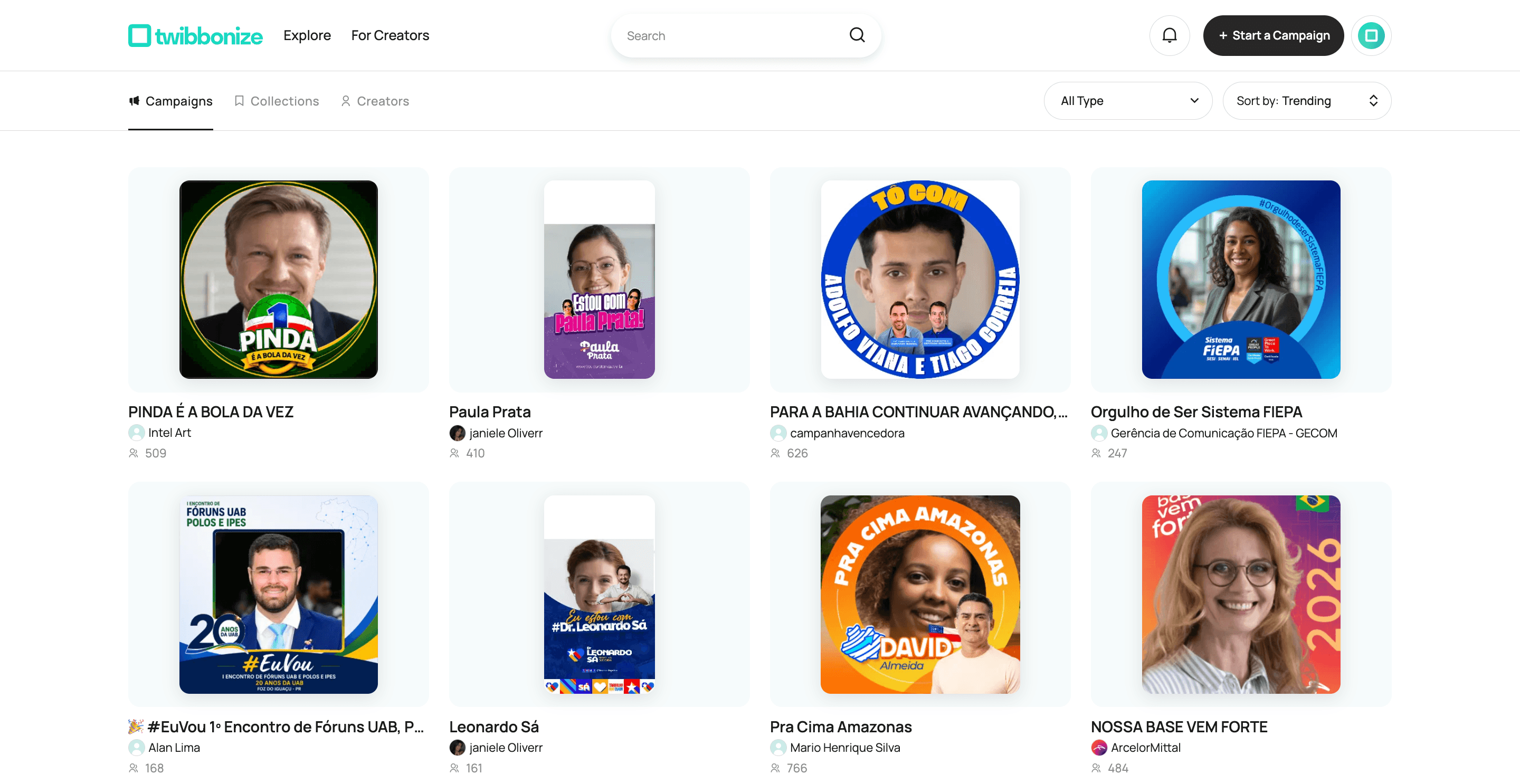
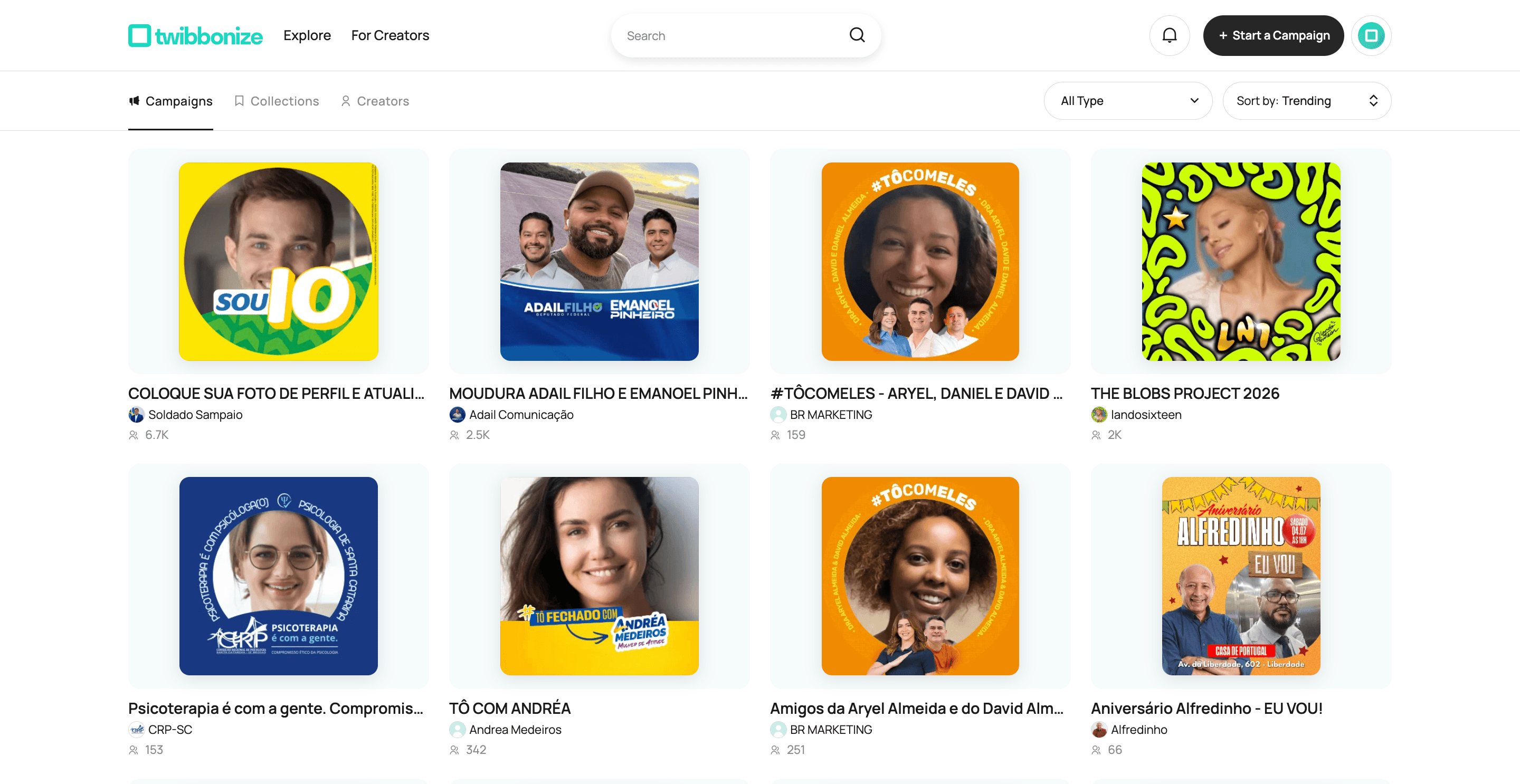
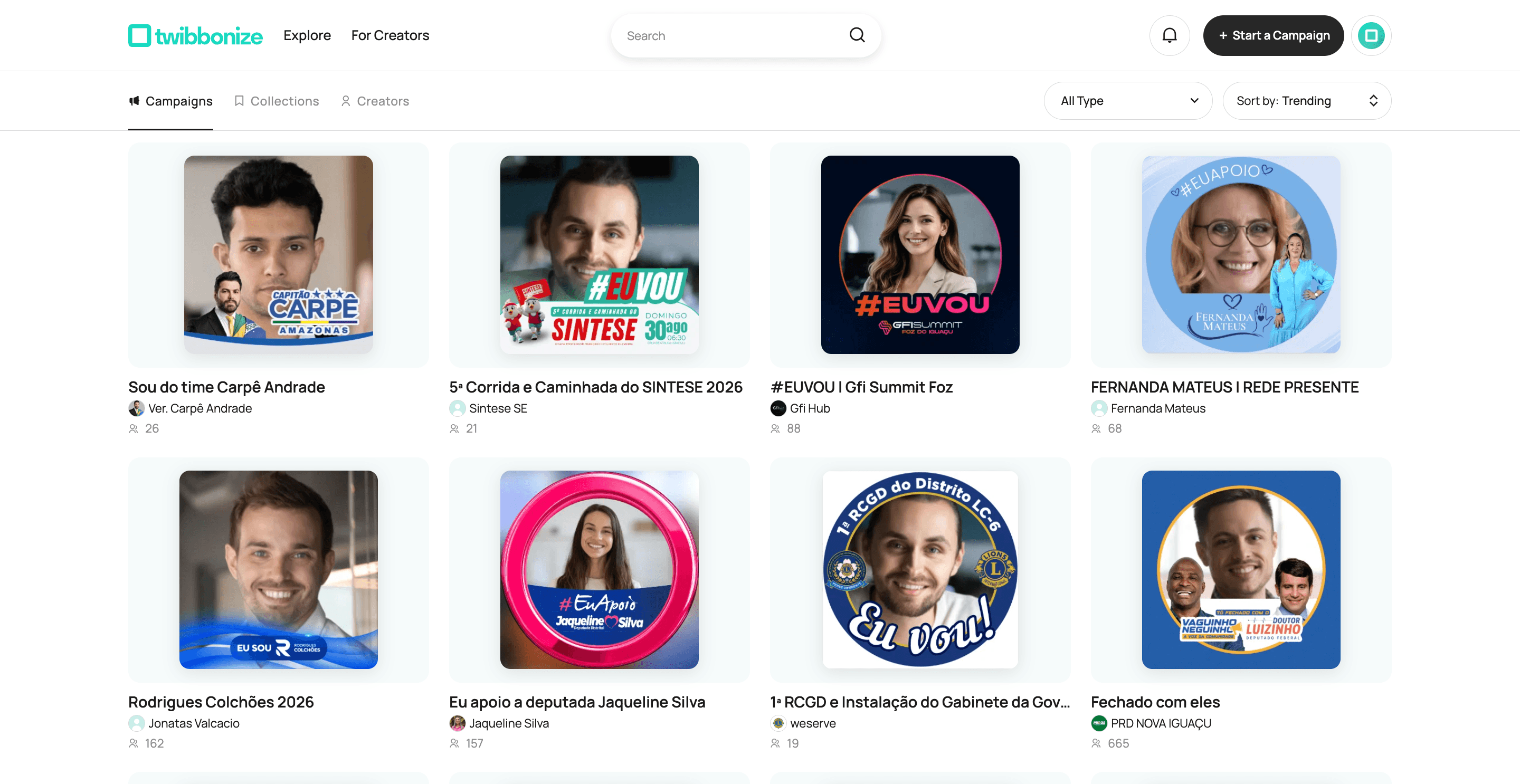
Trending campaigns in Brazil seen on Twibbonize as of July 3, 2026
What the campaigns say
In Bahia, "Tô Com Adolfo Viana e Tiago Correia" ("I'm With Adolfo Viana and Tiago Correia") names both men and tags each with his office, Viana as pré-candidato a deputado federal and Correia as pré-candidato a deputado estadual. Both are pre-candidates campaigning ahead of the August party conventions that make each candidacy official. In Amazonas, Manaus mayor David Almeida built "Pra Cima Amazonas" ("Onward, Amazonas") around his own logo-styled name as he runs for governor. In Coari, federal deputy Adail Filho paired with state-deputy hopeful Emanoel Pinheiro on a matter-of-fact campaign name, which means "Frame: Adail Filho and Emanoel Pinheiro". In Pernambuco, Andréa Medeiros folded a freshly launched personal brand, "Mulher de Atitude" ("Woman of Attitude"), into her frame. The fifth came from a different type of election: Roraima held a supplementary election for governor on June 21, and the interim governor's campaign, "Sou 10" ("I'm 10," a ballot number), carried a coalition's fine print and nothing else, yet reached 6,600 supporters.
How Brazil is different
Politics has moved onto Twibbonize before, and the shape it took elsewhere makes Brazil's version easier to read. In 2022, Filipino supporters turned their presidential race into something festive, rallying communities under candidate names and layering in pop culture, with taglines like "Swifties for Leni" and a Leni-Kiko campaign that drew 4.2 million supporters. That trend was communal and built to be shared. Brazil's reads differently. The campaigns center on the candidate rather than the crowd, carrying names or ballot numbers, and are often run by someone close to the candidate or by the candidate's own account. So far, there is little sign of these frames circulating widely on social media the way the Filipino ones did. That makes the Brazilian Twibbon read less like a group rally and more like a personal political statement: one supporter, one face, one declared allegiance.
Politics as part of our lives
Brazil right now is a case of what a visual campaign looks like at its most personal. Politics no longer stops at the street poster or the rally banner; it moves through the images people choose to put on their own profiles. Twibbonize did not decide which candidate got a campaign, or how far it spread. The creator starts the movement, the platform hosts it, and the supporter adds the face.
Any party or candidate anywhere can open the same door: publish a Twibbon, then let supporters contest and campaign for it in public, in their own feeds and their own words.